

How do bacteria get into our drinking water?
Bacteria are a normal part of our drinking water. After all, our drinking water isn't made of pure H2O. Alongside trace elements, minerals and salts, plenty of different bacteria are bustling around in drinking water too; up to 100,000 per milliliter, to be precise! In mineral water from the supermarket, by the way, there can even be ten to a hundred times more. That's because mineral water bottles often sit around at room temperature for a long time before or while they're being consumed. This allows the bacteria they contain to multiply strongly. So that's quite a lot of bacteria, and in principle that wouldn't be a bad thing either. Because bacteria are an important part of our body. Taking them in and having them present is important for the composition of our gut flora.
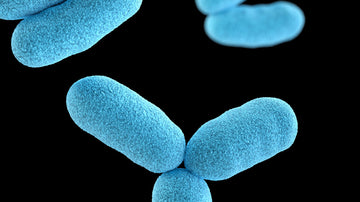
Unfortunately, there are also unwanted bacteria that are harmful to us. These are known as human pathogenic bacteria. They include, for example, E.coli bacteria (gut bacteria) or enterococci. If we take in too many of these bacteria through drinking water or through contaminated food, we suffer discomfort, diarrhea and nausea, all the way to vomiting. Most of us have experienced something like this, especially while traveling. Certain enterococci strains (particularly E. faecalis strains) can trigger serious infections in people with weakened immune systems.. (Image: Rocky Mountain Laboratories, NIAID, NIH)

Human pathogenic bacteria should in principle not be in our drinking water at all. The authorities have defined strict limits for this, which are also checked at regular intervals. Even so, you hear again and again that in some municipality the drinking water has to be boiled because the authorities have detected contamination with bacteria. How can that happen? Most of the time, heavy rainfall is the reason for the bacterial contamination of our tap water. Especially from spring to autumn, agricultural fields are fertilized regularly. The fertilizer contains the E.coli bacteria that are harmful to us. During heavy and prolonged rain, a lot of fertilizer is washed off the meadows into streams, rivers and lakes. It can happen that during such a phase the wastewater treatment plants also overflow from the large amount of water and can no longer perform their normal cleaning function. You then often see brown-colored rivers below treatment plants. (Image: Süddeutsche Zeitung, STA)

When harmful, disease-causing bacteria get into the cycle like this and end up in our drinking water at some point, usually only patience helps. Once the weather calms down again, dilution leads on its own to a gradual decline in the bacterial concentration. This also matches how the authorities proceed when they detect a load of harmful germs at a waterworks or a water catchment. The affected plant is then usually taken offline for a few days. Sometimes this process is also accelerated chemically (e.g. with emergency chlorination). Over time, the problem then resolves itself. For those affected, this is of course annoying, because during this time they have to boil their tap water.
Should you filter bacteria out of drinking water?
As mentioned at the start, the vast majority of the bacteria contained in drinking water are not harmful to us. On the contrary, they are even useful for our ecological balance. That's why it also makes no sense to clean the water completely of bacteria (so-called sterile filtration). Unless you suffer from an acute immune deficiency. Even so, you'd want the harmful – human pathogenic – bacteria banished from your tap water just in case. Here you can make use of a scientific fact. Disease-causing bacteria (E.coli, enterococci) are considerably larger than their harmless counterparts. With a cleverly chosen pore size of the filter, you can ensure that harmful bacteria are held back while the useful ones remain. drinkpure relies on a membrane that is specially manufactured and patented. This has been proven to hold back more than 99.99% of E.coli bacteria, while letting smaller bacteria pass through. Here you'll find the independent test reports on bacteria retention.
drinkpure also filters other substances out of the water. Here you'll find an overview of what DrinkPure can filter.