

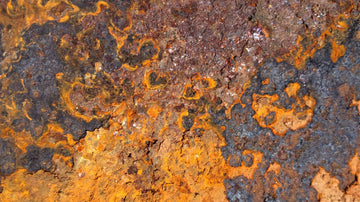
Old infrastructure as the main cause
The main reason for rusty tap water lies above all in old infrastructure. Especially for tenants this is extremely annoying, because completely replacing the sanitary pipes is very costly and is only rarely carried out by the landlord. Rust usually collects in the pipes especially during longer absences – this is called stagnant water. When the tap is then opened, the red-brown soup follows. In most cases the visible spook is over after just a few minutes with the tap running. But what remains is still the bland, metallic taste of the water. (Image: Badische Zeitung, dpa)

Rust forms when iron-containing pipes oxidize over time due to the oxygen in the water. This is a natural decay process. The iron oxide formed in the process, i.e. the rust, is insoluble. That's why over time it falls off the pipe and is carried along with the water flow as ultra-fine particles. This continues until the pipe is either replaced or bursts due to the resulting material weakness.
Is rust harmful to my health?
Rust does not pose a direct danger to health. Iron is basically an important mineral that our body needs in the form of iron(II) and iron(III). According to the WHO, depending on the case we need between 10 – 50 mg per day. But anyone now hoping for a positive effect from drinking rusty water will be disappointed. Iron absorption is a complex process. Otherwise iron nails would already be the healthy snack lollipop for in between today.
Back to the rust in tap water – the main problem is above all the taste of the water, which changes for the worse. Our senses can still perceive the bland, slightly iron-like taste even when the water is no longer obviously rusty and cloudy. Nevertheless, heavy rust formation can also indicate a bacterial problem. Bacteria can settle well in the rust blisters and layers that form. These can then lead to a sudden rise in bacteria in drinking water.
What can you do about it
The best and most sustainable thing would be to replace the pipes. There are also more affordable options. For example, pipes can be coated with epoxy resin. But here there is a risk that the epoxy layer will release chemicals into the water for months. You shouldn't drink that.
The simplest and most affordable solution, though, is effectively drinkpure. On the one hand, pre- and membrane filters filter the rusty tiny particles out of the tap water – you can tell by the orange-red discoloration on the originally white filter cartridge. On the other hand, the activated carbon also binds annoying odors that can form in combination with the rust.
drinkpure also filters other substances out of the water. Here you'll find an overview of what DrinkPure can filter.